


MarTech Outlook: Specials Magazine
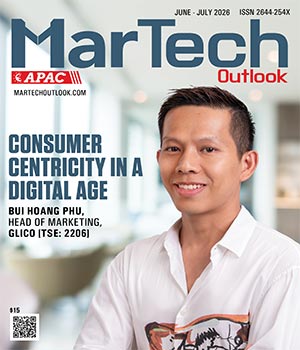
Bui Hoang Phu, Head of Marketing at GLICO in Vietnam, boasts nearly 20 years of FMCG marketing expertise. Responsible for overseeing marketing across confectionery, milk dairy and health and wellness categories, his strategic leadership drives brand growth and consumer engagement. With a consumer-centric approach, he targets diverse demographics, from teenagers to health-conscious individuals. Before his current role at GLICO, Phu gained valuable experience in renowned FMCG companies such as Nestle, Kimberly Clark, Abbott Nutrition, and Fonterra. Through this article, Phu discusses key trends shaping consumer engagement, such as the rise of artificial intelligence, the power of influencer marketing and the need for data-driven strategies. What, according to you, are some of the challenges that the sector has witnessed, and how has it impacted the field? Over the past few years, marketers have faced several interrelated challenges in keeping up with the rapidly changing digital landscape and evolving consumer behavior. First is the need to continually adapt marketing strategies to stay relevant as both the marketplace and marketing trends shift swiftly. Related to this is the essential shift towards data-driven marketing; understanding real-time consumer insights through digital signals is key to effectively tailoring campaigns. Finally, the heightened competitiveness of the digital marketplace necessitates that brands remain agile and innovative, investing in consumer recognition and retention efforts to stand out.
AI
“A brand can be visible in traditional search and still be absent from the answer generated by AI tools,” says Toshiki Matsumura, CEO of MediaReach. The SEO and generative AI search optimization consultancy separates generative engine optimization (GEO), known in Japan as large language model optimization (LLMO), into two objectives: source citation and brand recommendation, aligning AI visibility with the way buyers now discover, compare and evaluate brands before making decisions. The distinction is clearest in strategy design. Conventional SEO asks, “Which keywords should we rank for?” MediaReach asks how the brand should appear for a query and where that touchpoint sits in the customer journey. When the objective is citation, it strengthens rankings in retrieval-led environments such as Perplexity and Google AI Overview, where authoritative content is likelier to be selected. When the goal is recommendations, it builds trust signals by having AI read through media coverage, reviews, expert validation and industry recognition. From there, content architecture, link building, structured data, media outreach and digital PR become coordinated signals that help brands earn visibility inside AI-generated answers. “We balance SEO and GEO worlds to help brands move beyond ranking high enough to be searched. It increases their relevance, authority and likelihood of being discovered within the answer itself,” says Matsumura..

Technology and Software

Most people have played the childhood game of telephone: one person whispers a message to another, and by the time it reaches the last player, the phrase has changed beyond recognition. It is funny on a playground but costly in marketing. That same distortion occurs when campaigns move from research to planning, activation, and measurement. Each handoff introduces room for error, causing audience definitions to shift and strategies to lose focus. The result is wasted spend, weaker outcomes, and growing pressure on marketers to prove ROI. To overcome this, brands need one reliable source of audience truth that carries through every stage of the process. Bright Mountain tackles this challenge by working with enterprise and mid-market B2C companies across diverse industries. Its integrated marketing services platform is designed to preserve audience fidelity from the very beginning, ensuring the original strategy flows through research, planning, activation, measurement, and optimization without distortion. This approach creates stronger connections and delivers consistent results. Research and insights form the foundation for product development and marketing strategy, because every effective business decision begins with understanding the consumer. Preserving Audience Truth from Start to Finish Bright Mountain identifies fragmentation as the biggest obstacle for brands today. With so many technology vendors and data sources in play, marketing workflows are filled with handoffs that distort the original strategy. The company calls this loss of fidelity, likening it to the game of telephone where each stage alters the original intent. To solve this, Bright Mountain developed Audience Intelligence, a proprietary planning tool that protects audience definitions end to end. The platform reflects a research-first approach: audience profiles are built through primary research and converted into segments that flow into the tool. Audience Intelligence displays attributes, values, behaviors, purchase intent, purchase activity, and media consumption patterns. Armed with these insights, clients can design media and creative plans rooted in the original research. Campaigns are then activated through paid media targeting those same audiences, with built-in measurement for optimization. By avoiding proxies, the platform eliminates the signal loss that often starts the telephone game. Housing research, planning, activation, and measurement in one system keeps the strategy intact.
Digital Marketing
Influencer marketing has evolved from a trendy tactic into a cornerstone of modern brand strategy - but not without its growing pains. For years, the industry operated under the assumption that more collaborations and more content would naturally lead to more visibility. The result was a flood of generic, uninspired posts that blurred together and failed to make a lasting impact. Today’s consumers expect more. They’re smarter, more selective, and increasingly immune to content that feels inauthentic or irrelevant. The old playbook - volume over value - no longer delivers. That’s where RAD Intel, or RAD Intel, enters the scene. By redefining influencer marketing around authenticity, resonance, and real results, RAD Intel cuts through the noise to create campaigns that connect and convert. RAD Intel is an AI technology company redefining how brands connect with audiences. Its advanced language models analyze audience interests and behavior to automate smarter, more precise content strategy and delivery. The platform’s award-winning AI also eliminates bias in influencer selection, helping brands create authentic connections, drive stronger engagement, and deliver measurable ROI. Remove All Doubt Founded by serial entrepreneur Jeremy Barnett, RAD Intel was born out of a deep understanding of influencer marketing’s untapped potential. Barnett’s journey into the space began long before the term “creator economy” entered the mainstream. As the founder of Trendy Butler, a subscription-based fashion tech startup launched in 2012 and successfully exited in 2017, Barnett was an early adopter of influencer strategies. At that time, placing a product in the hands of an influencer could result in an immediate spike in traffic and sales. But as the space matured, those results became harder to replicate. “When we launched RAD, the goal was to streamline the entire influencer activation process - not just finding the right influencer, but understanding the right message, the intended impact on the audience, and how to monetize that content across the marketing funnel,” says Barnett. The challenge, as he saw it, wasn’t simply one of scale or automation. It was rooted in bias and subjectivity. Brands were choosing influencers based on gut feeling, personal preference, and flawed data sets. Even the more advanced tools on the market relied heavily on keyword searches and surface-level metrics, often missing the mark when it came to identifying who could truly move an audience to action.

Animated Explainer Video Production
In B2B marketing, explainer videos should be viewed as powerful tools that help clients solve problems, not merely as overviews of products or services. The purpose of an explainer video is to address the real challenges the viewer is facing and clearly show how a solution can make their life easier. Short, impactful videos play a critical role in capturing attention, meeting audiences where they are, and delivering clarity quickly. At the same time, the true strength of an explainer video lies in its ability to create an emotional connection. When a viewer feels that a video speaks directly to their pain points, they are far more likely to engage and take action. Rather than overloading any single video with details, the focus should be on crafting a narrative that resonates with the viewer’s frustrations and presents a clear, hopeful path forward. This approach keeps videos concise, purposeful, and effective, positioning them as conversation starters that invite deeper engagement rather than one-way explanations. Digital Brew understands this shift in perspective. The company has built its approach on the idea that success is not about delivering all information at once, but about connecting emotionally with the viewer. It positions explainer videos as short, top-of-funnel assets designed to resonate with the viewer’s challenges and then demonstrate how a client’s product or service can alleviate those problems. “We approach explainer videos as strategic instruments rather than creative deliverables, applying structure, intent, and restraint. Each video serves a defined role within a broader marketing system instead of existing as a standalone asset,” says Michael Cardwell, CEO.

AI Advertising Tech

Generative AI - Friend or Foe?
Fiona Corsie, Head of Marketing & eCommerce (AU/NZ), Bunzl Australia & New Zealand
Customer Experience Management

Why Creative is the New Targeting
Jave Lin, Senior Digital Performance Manager (APAC), Aberdeen
Event Management

Structuring Retail Growth Around People and Purpose
Ria Sutrisno, Head of Marketing, MR.D.I.Y. Indonesia
Digital Advertising

Driving Hospitality Growth through Digital Brand Strategy
Blessy Townes, M.S. Adv., VP & Head of Digital Marketing and Branding, Discovery Hospitality
Digital Advertising

Product-Led Growth in today's AI world
ZeMing Chan, Head Growth Innovation & Product Marketing (APAC & EU), foodpanda

IN MY OPINION
Digital Advertising
Design Thinking Meets GenAI: Defining What Marketing Teams Can Do
Jasmine Osada, Associate Director, Workspace Marketing and Community Management, CapitaLand [SGX: 9CI]

LAST WORD
Digital Advertising
Driving Growth through Adaptive Global Marketing Strategies
Terry Tong, Global Marketing Director, K&F CONCEPT
IN FOCUS

APAC's Digital Evolution: Harnessing Generative AI for Search Excellence
Generative AI search optimization enhances search accuracy and relevance, improves content visibility and automates the optimization processes.

Harnessing Customer Data Platforms for Enhanced Engagement in APAC
Customer Data Platforms (CDPs) enable APAC businesses to unify customer data, enhance engagement, and personalize experiences for competitive advantage.
EDITORIAL
Building Visibility In The AI Search Economy
This edition of MarTech Outlook APAC explores how companies are adapting marketing execution, customer engagement and digital discoverability for an environment increasingly influenced by AI search behavior and changing consumer expectations.
Featured in this issue, MediaReach is recognized as the Top Generative AI Search Optimization Solution in APAC 2026. The company approaches generative engine optimization through two clear priorities that help brands earn citations in AI-generated responses and improve the chances of being recommended during conversational searches. Instead of relying only on keyword rankings, MediaReach focuses on content structure, authority building, digital PR and structured data shaped around how people now interact with AI-driven platforms. Its approach also considers language differences across APAC markets, helping organizations improve visibility across AI platforms and generative search environments.
Perspectives featured throughout this edition further expand the discussion around adaptive marketing systems and customer engagement. Jasmine Osada, Associate Director, Workspace Marketing and Community Management at CapitaLand, examines how design thinking and generative AI are reshaping marketing workflows by combining structured problemsolving with faster creative exploration. Terry Tong, Global Marketing Director at K&F Concept, discusses how global brands maintain consistency across markets by adapting communication strategies around local language, culture and evolving customer behavior without changing core brand identity.
The organizations and leaders featured in this edition reflect how marketing is increasingly moving towards systems built on adaptability, structured execution and AI-aware visibility. We invite readers to explore the perspectives and insights presented throughout this issue.
